类人形机器人
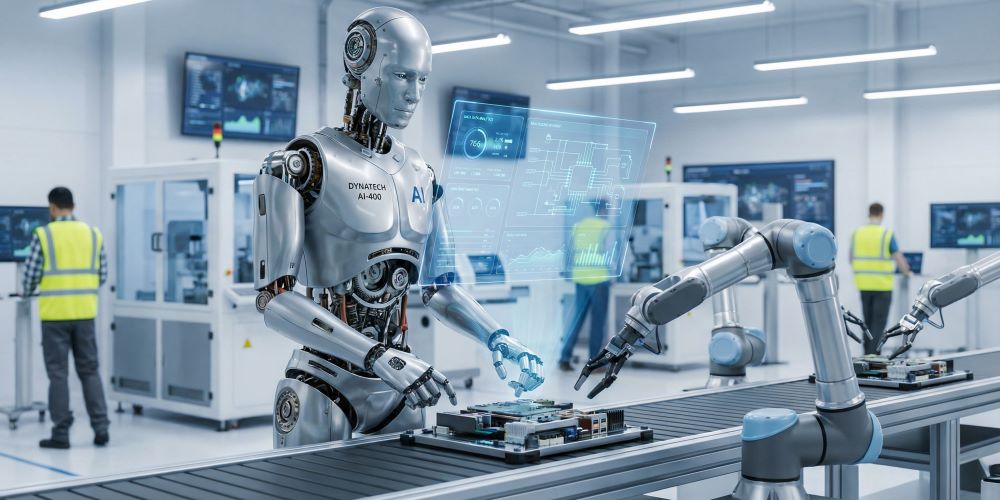
智能自动化重塑生产工作
类人形机器人融合了人工智能、先进传感技术、自主移动能力以及类人的灵巧性,能够在复杂的现实环境中执行各项任务。这些系统有望解决劳动力短缺问题、提高生产效率、增强安全性,推动从制造业、物流业到医疗保健及服务自动化等各行业的转型。.
物理AI实现类人形机器人
类人形机器人融合了人工智能和半导体技术,可在人类环境中实现实时感知、决策、通信和运动控制。与工业机器人不同,类人形机器人能够在动态空间中移动,与人安全互动,操作各种物体,并适应环境变化。这需要先进的电子、软件和半导体解决方案。 现代类人形机器人依赖于五大关键子系统:计算、传感与感知、执行、供电和互联,从而实现自主感知、决策和任务执行。
计算子系统作为机器人的“大脑”,支持人工智能、机器学习、运动规划和传感器融合。它利用高性能处理器和神经网络单元,处理来自摄像头、深度传感器、惯性传感器等设备的数据。边缘端的人工智能推理使机器人无需依赖云端即可进行实时决策。传感与感知子系统通过图像传感器、深度技术、雷达、触觉传感器和音频输入提供环境感知能力。结合这些模态有助于机器人检测障碍物、识别物体、估算距离并在复杂环境中导航。
执行子系统将数字指令转换为物理运动。类人形机器人全身拥有众多独立控制的关节,每个关节都需要电机控制电子设备。这些系统采用微控制器、栅极驱动器、功率半导体、传感器和反馈装置来实现精确运动。 先进的机器人手部结构更为复杂,配备了用于工具操作的触觉传感器和力传感器。电源子系统通过电池管理、电力分配、电压转换和充电基础设施来支持这些功能。硅MOSFET、GaN和SiC器件等高效技术可提高能效、减轻重量并延长运行时间。
第五个核心组件互联,实现了机器人内部以及与外部系统之间的通信。 高速网络促进了传感器、执行器、控制单元以及车队管理平台等基础设施之间的数据交换。主要发展趋势包括物理人工智能、传感器融合、灵巧操作、分布式计算和节能型执行器。主要挑战在于确保机器人在非结构化环境中可靠、安全地运行,这些环境中机器人必须实时感知、推理并采取行动。 随着机器人从试点向商用扩展,确保遵守ISO 10218、ISO/TS 15066、IEC 61508、ISO 13849和IEC 60204-1等标准,才能保障机器人应用的安全性、可靠性、网络安全及法规合规性。

Previous
Next
产品
Image Sensors
A broad portfolio of industry leading image sensors that satisfy requirements of every possible end application from wearables and consumer electronics to demanding industrial and automotive applications.
Image Signal Processors (ISPs)
A selection of imaging co-processors for use with advanced CMOS image sensors.
Low/Medium Voltage GaN FETs
GaNEXUSTM Enhancement-mode discrete lateral GaN HEMTs 40V – 200V, optimized for high-efficiency, mid-voltage power conversion and compact system designs.
Low/Medium Voltage MOSFETs
Portfolio of comprehensive range of Low-medium voltage power Mosfets that delivers superior performance and reliability for switching applications. Our cutting-edge PowerTrench® T10 technology delivers industry leading RDS, higher power density, reduced switching losses and better thermal performance.
Motor Drivers
A selection of brushed, brushless, stepper motor drivers and controllers along with some load and relay drivers.
Ethernet Controllers
IEEE-compliant ethernet controllers designed for robust communication in a wide range of environments and applications.
Silicon Photomultipliers (SiPM)
onsemi offers a complete line of Silicon Photomultipliers (SiPM) covering a wide range of applications.
Bluetooth Low Energy
RSL15
Bluetooth® 5.2 Secure Wireless MCU
Inductive Sensing
NCS32100
Industrial Rotary Position Sensor
Ultrasonic Sensor
NCV75215DB001R2G
Ultrasonic Parking Distance Measurement ASSP
Sensor Signal Conditioning
NCV7192
Bridge Signal Conditioning Interface with Analog or SENT output
Sensor Signal Conditioning
NCV76124
Rain and Light Sensor Interface with SPI
Documents
Tutorial
GaN Power Architectures Guide
Tutorial
Image Sensors for Drones and Robotics Tutorial
White Papers
探索图像传感器在机器人和自动化领域的影响力
Application Notes
Top Cool Package for Power Discrete MOSFETs
White Papers
从 “扫描” 到 “洞察”: Hyperlux ID 如何赋能下一代机器视觉
Tutorial
简化成像设备从设计 到制造的全流程教程
Tutorial
Enabling Smarter industrial 3D Sensing with Hyperlux ID
White Papers
适合高速应用的全局快门图像传感器
White Papers
安森美PRISM图像传感器参考模块优化摄像头开发
White Papers
使用短波红外(SWIR)图像传感器的激光成像
White Papers
借助间接飞行时间 (iToF) 技术的进步攻克挑战
White Papers
用于压力和力传感器的高可靠性信号调理
评估板/套件
Evaluation Kit
NCV7192EVK
Bridge Signal Conditioning Interface Evaluation Kit
Evaluation Kit
NCV75215R1GEVK
Ultrasonic Sensor Evaluation Kit
Evaluation Kit
AGB1N0CS-GEVK
Demo 3 Baseboard
Evaluation Board
AF0130CSSM30SMKAH3-GEVK
Indirect Time of Flight (iToF) Depth Sensing Evaluation Board
MODULE
PRISM1M-AR0235CSSM130110-GEVB
The AR0235CS 2.0 MP Premier Reference Image Sensor Module (PRISM) module
MODULE
PRISM1M-AR0145CSSM130110-GEVB
AR0145CS 1.0 MP Premier Reference Image Sensor Module (PRISM) module
Evaluation Kit
NCV76124EVK
Rain and Light Sensor Evaluation Kit
Evaluation Kit
NCV705XXLITEGEVK
NCV705XX Microstepping motor driver family evaluation kit
Evaluation Kit
LV8907UWGEVK
Sensor-less Three-phase Brushless DC Motor Controller, with Gate Drivers Evaluation Kit
Evaluation Board
LV8968BBGEVB
Multipurpose Three-Phase Brushless DC Predriver Evaluation Board
常见问题解答
现代类人形机器人通常由五大子系统组成:驱动系统、传感与感知系统、动力系统、计算系统以及互联系统。这些模块协同工作,从而实现类人运动、环境感知、决策和通信。 企业级机器人架构参考资料还强调了“分布式智能”的概念,即本地控制器、传感器和电机驱动器与集中式人工智能计算系统协同工作。
主要挑战包括实现类人级灵巧性、在计算性能与电池续航之间取得平衡、确保在人群中的功能安全、散热管理问题、传感器和执行器的集成,以及训练数据匮乏。感知、决策与运动控制之间的实时协调仍然是最棘手的工程难题之一。
与传统的硅MOSFET解决方案相比,氮化镓(GaN)器件具有更高的开关频率、更低的损耗、更高的功率密度以及更小的系统尺寸。这些优势有助于减小执行器的尺寸和重量,同时延长电池续航时间——这两点都是移动类人型平台不可或缺的要求。
这一行业正从单一集中式控制器向分布式智能架构转型。高性能人工智能处理器负责感知和规划,而本地化控制器则管理运动、传感和安全功能。这种方法可降低延迟、提高可扩展性,并实现更快的实时响应。
类人形机器人依赖于多种传感技术的融合,包括:
- RGB和全局快门相机
- 飞行时间(ToF)深度传感器
- 惯性测量单元(IMU)和位置编码器
- 力传感器和扭矩传感器
- 触觉传感器和压力传感器
- 麦克风阵列
- 雷达和接近传感器
传感器融合使机器人能够感知、理解并安全地在复杂环境中导航。
精选文章
为您精选的新闻和博文,挖掘创新灵感,洞见行业趋势。
2025年10月30日
2025年8月12日

2025年8月25日
2025年2月24日
Previous
Next
精选视频
浏览相关视频,以全新视角,探索更多细节。


humanoid robotics